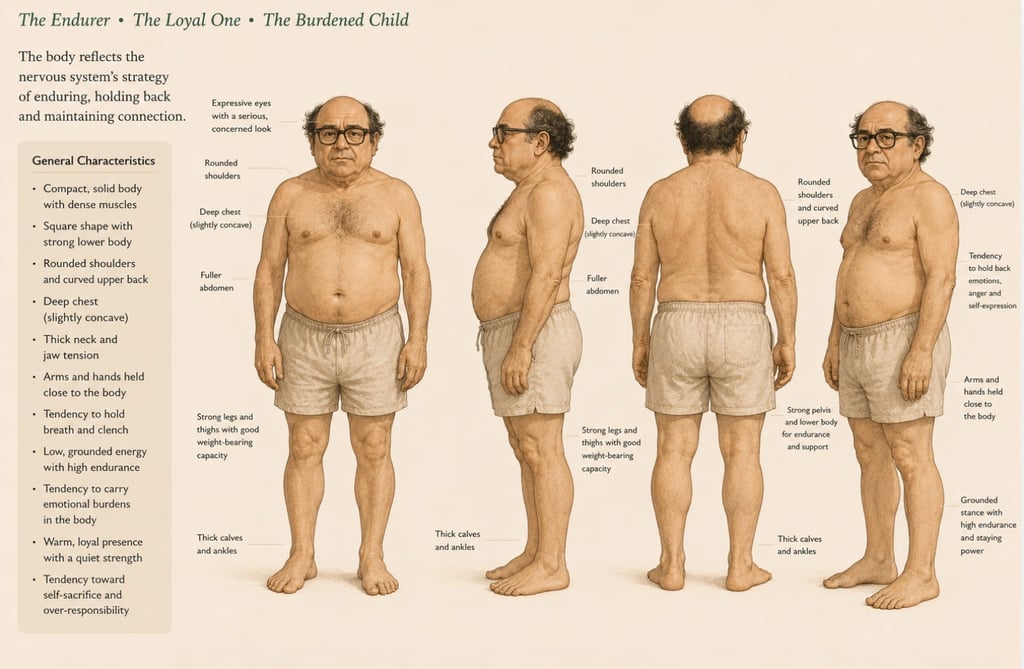
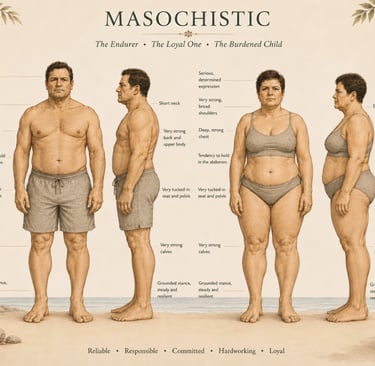
The Endurer • The Loyal One • The Burdened Child
The Masochistic character structure often develops when love, approval, or safety felt connected to obedience, compliance, or self-suppression.
A child may learn to hold back emotions, needs, impulses, anger, excitement, or self-expression in order to maintain connection, avoid humiliation, or prevent conflict.
Over time, the nervous system may learn to endure, tolerate discomfort, carry emotional burdens, and contain energy rather than express it freely.
This pattern is not a flaw or diagnosis. It is a survival adaptation that once helped protect connection and belonging within the family system.
Most people carry a blend of character structures, though one pattern may feel more dominant.
Masochistic
Core Emotional Experience
People with this pattern may experience:
Feeling responsible for others’ wellbeing
Difficulty expressing needs, anger, or frustration
Fear of conflict, rejection, or disappointing others
Enduring stress or discomfort without asking for support
Tendency to put others’ needs before their own
Challenges setting healthy boundaries
Some people describe feeling:
“I have to be strong”
overwhelmed but unable to stop
emotionally burdened
responsible for everyone else
afraid of upsetting people
unseen despite doing so much
exhausted from carrying too much
resentful but unable to say no


How This May Show Up in Adult Life
Relationships
You may notice:
difficulty saying no or setting limits
taking responsibility for other people's feelings
staying in relationships longer than is healthy
giving more than you receive
avoiding conflict or difficult conversations
resentment building beneath a calm exterior
At the same time, many people with this pattern deeply value loyalty, commitment, stability, and caring for others.
Emotional Patterns
Common tendencies may include:
Suppressing anger or frustration
Fear of disappointing others
Chronic self-sacrifice
Difficulty recognising personal needs
Guilt when prioritising themselves
Feelings of burden, exhaustion, or resentment
Some people fluctuate between:
over-giving and resentment
endurance and exhaustion
compliance and suppressed anger
Work & Daily Life
You may notice:
strong reliability and commitment
willingness to take on extra responsibilities
perseverance during difficult circumstances
difficulty asking for help or support
putting others' needs before their own
overworking to meet expectations
becoming depleted from carrying too much for too long
Many people with this pattern are dependable, caring, resilient, hardworking, and deeply committed to supporting the people and communities around them.
Common Strengths & Gifts
People with this pattern are often:
dependable and reliable
hardworking and committed
resilient under pressure
loyal and devoted
patient and persistent
responsible and trustworthy
caring and supportive
grounded and practical
dedicated to helping others
capable of enduring challenges
Many develop a strong capacity for perseverance, responsibility, commitment, service, and creating stability for the people and communities they care about.
Challenges That May Arise
Without support and healing, this pattern may contribute to:
chronic self-sacrifice
difficulty expressing anger
people-pleasing and compliance
feelings of resentment
guilt when prioritising personal needs
taking on too much responsibility
difficulty setting boundaries
emotional and physical exhaustion
passive resistance or stubbornness
feeling burdened, trapped, or unsupported
Many people become highly focused on meeting the needs of others because expressing their own needs once felt unsafe, unwelcome, or likely to create conflict.
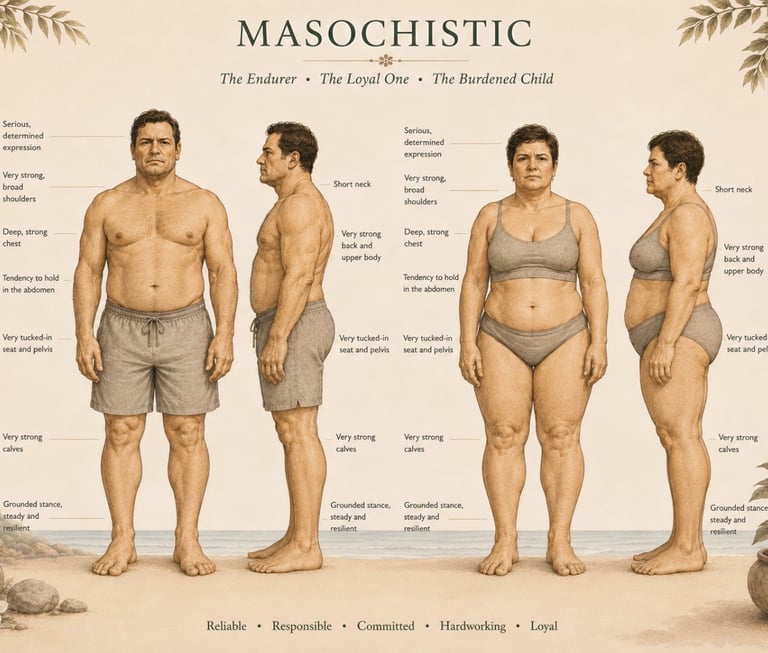
Body & Nervous System Patterns
Breathing & Energy
You may notice:
restricted or held breathing
tension in the diaphragm, abdomen, or jaw
holding the breath during stress or conflict
carrying tension rather than expressing emotion
fatigue from prolonged self-control and over-responsibility
Many people with this pattern spend significant energy containing emotions, enduring pressure, and managing responsibilities without asking for support.
Facial Expression & Eyes
You may notice:
serious or determined eyes
warmth hidden beneath guardedness
sensitivity concealed behind strength
restrained emotional expression
difficulty revealing vulnerability
The eyes often reflect endurance, loyalty, and a deep desire to be appreciated while remaining self-contained.
Posture & Movement
The body may appear:
compact, dense, and strongly built
held or compressed through the pelvis
broad through the back and shoulders
sturdy and resistant rather than expansive
grounded yet restricted in movement
Some people may appear strong and capable externally while carrying unexpressed frustration, burden, or emotional strain internally.
Grounding & the Lower Body
You may notice:
strong energetic charge in the legs
powerful calves and lower body structure
a tendency to hold tension in the pelvis
difficulty relaxing despite feeling grounded
carrying responsibility physically in the body
Some people describe feeling weighed down by obligations, yet capable of enduring far more than others expect.
Character structures are reflected not only emotionally, but also through the body and nervous system.
The body may learn to protect itself through tension, withdrawal, freezing, or reduced energetic expression.
Not every person will have all of these traits.

Healing is not about changing who you are.
It is about helping the body and nervous system experience greater freedom, self-expression, balance, and self-support.
Healing may involve:
learning to identify and honour your own needs
expressing anger in healthy and constructive ways
releasing chronic tension and emotional holding
developing healthy boundaries
reducing guilt around self-care
allowing yourself to receive support
balancing responsibility with personal wellbeing
speaking honestly instead of enduring silently
cultivating self-compassion and self-worth
reconnecting with joy, pleasure, and spontaneity
The goal is not to become "less caring" or "less responsible," but to carry life's responsibilities without losing yourself in the process.
Healing & Integration
In Core Energetics Sessions
Sessions may include:
grounding practices
breathwork
body awareness
healthy expression of anger
movement and embodiment
releasing chronic tension
boundary work
voice work
exploring patterns of responsibility and self-sacrifice
learning to receive support without guilt
The work is always approached with respect for the body's protective adaptations, developmental history, and natural pace.


Important Note
Character structures are not psychiatric diagnoses.
These patterns are best understood as adaptive survival responses that develop through early relational and nervous system experiences.
Most people carry a blend of character structures, and these descriptions are intended for self-awareness and healing — not as labels or limitations.
Lilian V. (Brazil)
Grace has really helped me overcome some past issues I had been keeping under a lid for a long time. Now, I feel happier and more confident in my life. I also feel that my speed was respected.
Márcia M. (Brazil)
Coming from an Evangelist family, I had doubts this kind of therapy could help me, I was relieved to see that my own faith was brought in, and I could start building my identity on a solid base.
Happy clients
TESTIMONIALS


Have any questions?
If you have any questions about the therapies, feel free to contact us.
Tools for wellbeing
BLOG
Clinic
Broadway
Perth, WA 6009
Contacts
info@homeofcoreenergetics.com
+61 0432 442 371
Grace Mulberry, Body Psychotherapist

Acknowledge the Traditional Custodians of the land on which we work and live, and recognise their continuing connection to land, water and community. We pay respect to Elders past, present and emerging.


Aknowledgement to Country