
The Dreamer • The Observer • The Unwanted Child
The Schizoid character structure often develops very early in life, when connection, safety, or emotional welcome did not feel fully available to the nervous system.
A child may learn to retreat inward, disconnect from feelings, stay hyper-alert, or escape into imagination in order to feel emotionally safe.
This pattern is not a flaw or diagnosis. It is a survival adaptation that once helped protect a sensitive nervous system.
Most people carry a blend of character structures, though one pattern may feel more dominant.
Oral
Core Emotional Experience
People with this pattern may experience:
Feeling a deep longing for connection and support
Fear of abandonment, rejection, or being left alone
Seeking reassurance, approval, or emotional closeness
Difficulty feeling fully nourished or fulfilled
Sensitivity to the availability of others
A tendency to give excessively in order to receive love
Challenges with self-support and independence
Feeling more comfortable in imagination, spirituality, ideas, or inner worlds
Some people describe feeling:
“needy”
alone even when surrounded by others
emotionally hungry
never quite getting enough
always searching for something missing
deeply connected to others, yet afraid of losing them


How This May Show Up in Adult Life
Relationships
You may notice:
• fear of abandonment or being left alone
• seeking reassurance, closeness, or validation
• difficulty feeling fully nourished in relationships
• becoming overly dependent on others for support
• giving excessively in order to feel loved or needed
• sensitivity to distance, rejection, or emotional unavailability
At the same time, many people with this pattern deeply value intimacy, connection, affection, and meaningful relationships.
Emotional Patterns
Common tendencies may include:
Fear of rejection or abandonment
Longing for connection
Emotional dependency
Difficulty being alone
Seeking reassurance or validation
Feelings of emptiness or lack
Some people fluctuate between:
• seeking connection and feeling disappointed
• dependence and independence
• emotional fullness and emptiness
Work & Daily Life
You may notice:
strong people skills and empathy
creativity and emotional intelligence
a desire for collaboration and connection
sensitivity to feedback or criticism
difficulty sustaining motivation when feeling unsupported
seeking reassurance before taking action
becoming depleted when giving too much to others
Many people with this pattern are warm, caring, intuitive, generous, relational, and naturally attuned to the emotional needs of others.
Common Strengths & Gifts
People with this pattern are often:
highly empathetic
warm and caring
emotionally intelligent
nurturing
generous
relationally attuned
affectionate and loving
intuitive about people's needs
capable of deep connection
compassionate and supportive
Many develop a strong capacity for intimacy, emotional connection, caregiving, community building, and meaningful relationships.
Challenges That May Arise
Without support and healing, this pattern may contribute to:
fear of abandonment
emotional dependency
chronic feelings of emptiness
difficulty being alone
seeking validation from others
people-pleasing
overspending or emotional eating
difficulty maintaining boundaries
sensitivity to rejection
disappointment in relationships
Many people become highly focused on external sources of support because self-nourishment once felt unavailable.
Body & Nervous System Patterns
Breathing & Energy
You may notice:
shallow breathing
tightness in the chest, diaphragm, or throat
holding the breath during emotional stress
low energy when feeling unsupported
difficulty maintaining a sense of inner fullness
Many people with this pattern spend significant energy seeking connection, reassurance, or emotional nourishment.
Facial Expression & Eyes
You may notice:
expressive or searching eyes
warmth and friendliness in facial expression
sensitivity to others' reactions
visible disappointment when needs are unmet
difficulty hiding emotional pain
The eyes often reflect a deep longing for connection, closeness, and emotional contact.
Posture & Movement
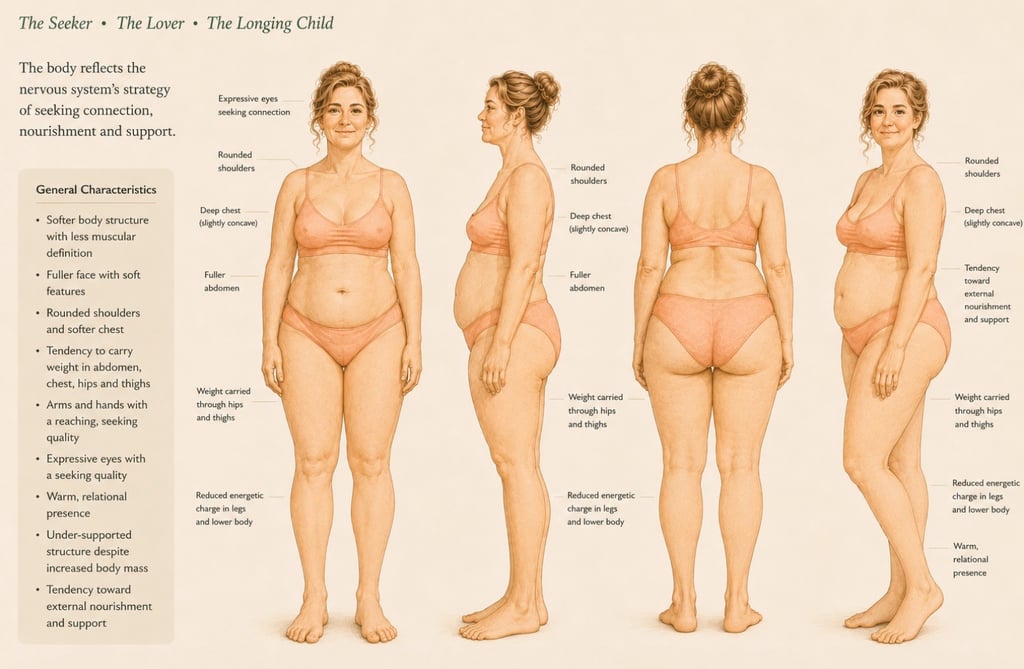
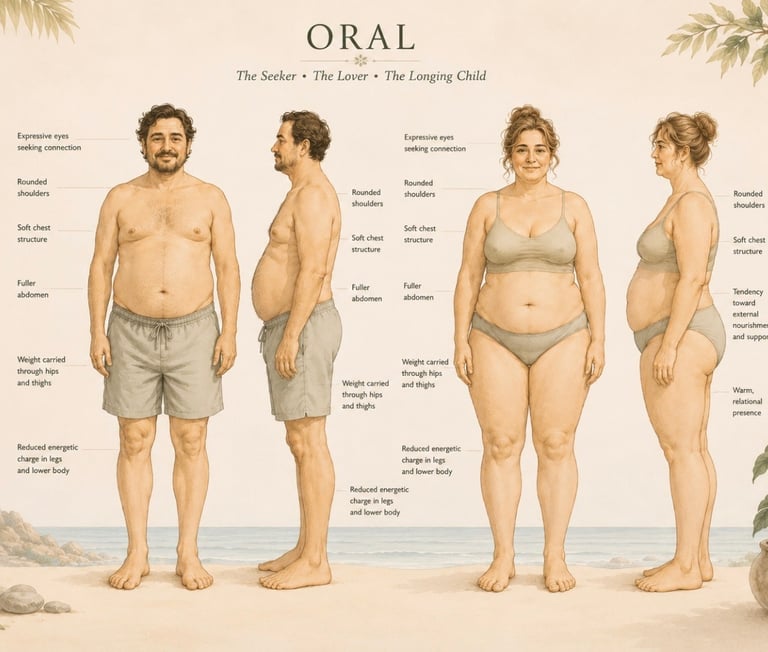
The body may appear:
slightly collapsed through the chest
soft or under-supported in structure
rounded through the shoulders
reaching toward others energetically
less grounded during emotional stress
Some people may appear confident externally while feeling emotionally dependent internally.
Grounding & the Lower Body
You may notice:
reduced energetic charge in the legs
feeling unsupported or ungrounded
weakness during periods of emotional loss
difficulty standing fully in personal power
seeking external sources of nourishment
Some people describe feeling disconnected from their own inner resources, support, or sense of fulfillment.
Character structures are reflected not only emotionally, but also through the body and nervous system.
The body may learn to protect itself through tension, withdrawal, freezing, or reduced energetic expression.
Not every person will have all of these traits.


Healing is not about changing who you are.
It is about helping the body and nervous system experience greater internal support, nourishment, grounding, and emotional fulfillment.
Healing may involve:
developing self-support
learning to meet your own needs
strengthening healthy boundaries
increasing energetic charge and vitality
building self-worth from within
processing grief and unmet needs
learning to receive without dependency
expressing needs and feelings directly
creating secure relationships
developing emotional resilience
The goal is not to become "less needy," but to feel more internally supported, fulfilled, and connected to yourself.
Healing & Integration
In Core Energetics Sessions
Sessions may include:
grounding practices
breathwork
body awareness
emotional expression
movement and embodiment
building internal support
boundary work
voice work
exploring attachment and relationship patterns
learning to receive nourishment and support
The work is always approached with respect for the body's protective adaptations, developmental history, and natural pace.


Important Note
Character structures are not psychiatric diagnoses.
These patterns are best understood as adaptive survival responses that develop through early relational and nervous system experiences.
Most people carry a blend of character structures, and these descriptions are intended for self-awareness and healing — not as labels or limitations.
Lilian V. (Brazil)
Grace has really helped me overcome some past issues I had been keeping under a lid for a long time. Now, I feel happier and more confident in my life. I also feel that my speed was respected.
Márcia M. (Brazil)
Coming from an Evangelist family, I had doubts this kind of therapy could help me, I was relieved to see that my own faith was brought in, and I could start building my identity on a solid base.
Happy clients
TESTIMONIALS


Have any questions?
If you have any questions about the therapies, feel free to contact us.
Tools for wellbeing
BLOG
Clinic
Broadway
Perth, WA 6009
Contacts
info@homeofcoreenergetics.com
+61 0432 442 371
Grace Mulberry, Body Psychotherapist

Acknowledge the Traditional Custodians of the land on which we work and live, and recognise their continuing connection to land, water and community. We pay respect to Elders past, present and emerging.


Aknowledgement to Country