
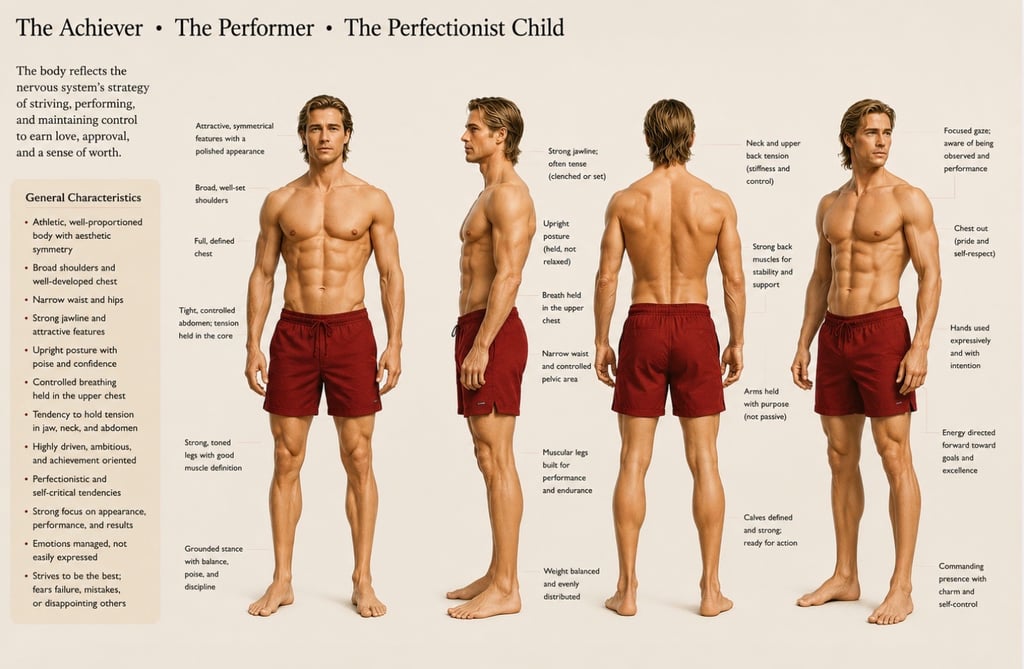
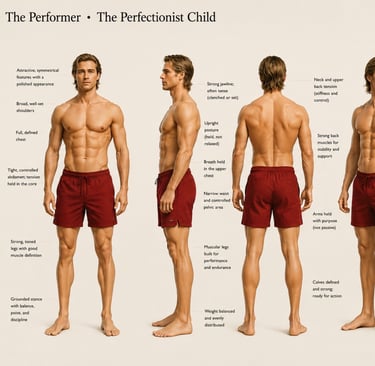
The Achiever • The Performer • The Perfectionist Child
The Rigid character structure often develops when love, approval, or connection felt linked to performance, achievement, appearance, or meeting expectations.
A child may learn that expressing certain feelings, needs, vulnerabilities, or imperfections could risk disappointment, rejection, or loss of love.
Over time, the nervous system may learn to strive, excel, maintain control, and present a competent image rather than reveal deeper emotional needs.
Energy often becomes directed toward achievement, self-discipline, independence, and doing things "the right way" while keeping vulnerable feelings carefully protected.
This pattern is not a flaw or diagnosis. It is a survival adaptation that once helped preserve love, dignity, self-worth, and connection within important relationships.
Most people carry a blend of character structures, though one pattern may feel more dominant.
Rigid
Core Emotional Experience
People with this pattern may experience:
Strong desire to be admired, appreciated, or valued
Difficulty showing vulnerability, weakness, or emotional need
Fear of failure, rejection, or not being "good enough"
Pressure to perform, achieve, or meet high expectations
Tendency to compare themselves with others
Challenges relaxing perfectionistic standards
Some people describe feeling:
“I always need to do my best”
“I don't want anyone to see my flaws”
“I have to earn love and approval”
“I'm afraid of making mistakes”
“I look successful, but I feel pressure inside”
“I work hard to maintain my image”
“I struggle to relax and let go”
“I want to be loved for who I am, not just for what I achieve”


How This May Show Up in Adult Life
Relationships
You may notice:
difficulty showing vulnerability or emotional needs
seeking approval, admiration, or validation
staying emotionally guarded despite wanting connection
striving to be the "ideal" partner
sensitivity to rejection, criticism, or comparison
maintaining appearances even when struggling internally
At the same time, many people with this pattern deeply value loyalty, commitment, intimacy, and creating meaningful relationships.
Emotional Patterns
Common tendencies may include:
suppressing vulnerability or emotional pain
fear of failure, rejection, or not being enough
perfectionism and self-criticism
difficulty relaxing or letting go of control
comparing themselves to others
feelings of pressure, disappointment, or inadequacy when expectations are not met
Some people fluctuate between:
striving for excellence and fear of failure
confidence and self-doubt
achievement and emotional exhaustion
Work & Daily Life
You may notice:
strong ambition and achievement orientation
high standards for themselves and others
dedication to quality and performance
difficulty accepting mistakes or imperfections
strong focus on goals, results, and success
overworking to meet expectations or maintain standards
becoming frustrated when efforts are not recognised
Many people with this pattern are disciplined, capable, motivated, hardworking, and deeply committed to growth, excellence, and reaching their full potential.
Common Strengths & Gifts
People with this pattern are often:
confident and self-assured
ambitious and achievement-oriented
energetic and highly motivated
charismatic and engaging
disciplined and determined
capable and competent
independent and self-reliant
passionate and expressive
goal-focused and productive
committed to excellence and growth
Many develop a strong capacity for leadership, creativity, perseverance, healthy pride, and the ability to bring vision, passion, and accomplishment into the world while inspiring others through their presence and determination.
Challenges That May Arise
Without support and healing, this pattern may contribute to:
perfectionism and self-criticism
fear of failure or rejection
difficulty showing vulnerability
excessive focus on achievement and success
hiding emotional needs behind competence
overworking and chronic stress
competitiveness and comparison with others
difficulty relaxing or slowing down
fear of losing control or appearing weak
struggles with intimacy and authentic connection
Many people become highly focused on maintaining an image of strength, success, or independence because expressing vulnerability, emotional needs, or imperfection once felt unsafe, disappointing, or likely to lead to rejection.
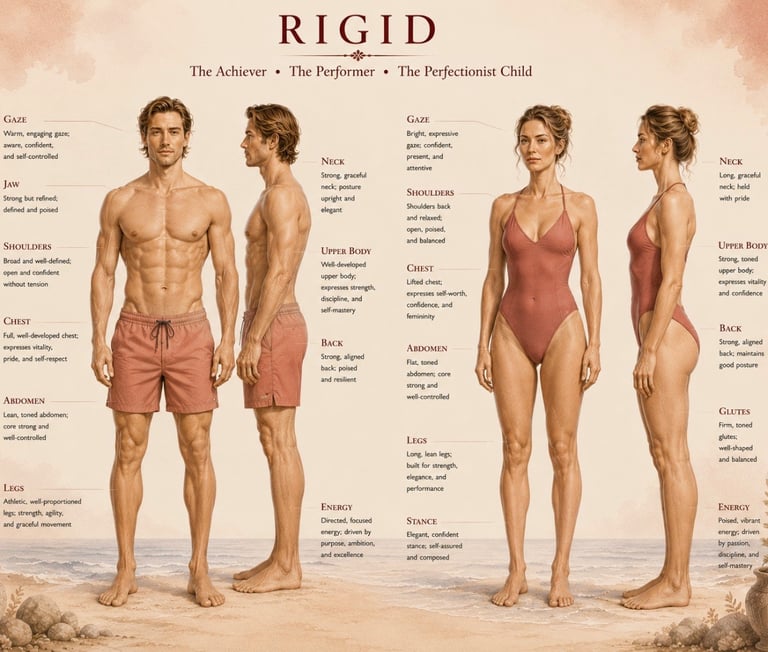

Body & Nervous System Patterns
Breathing & Energy
You may notice:
shallow or upper-chest breathing
holding the breath when striving, performing, or under pressure
tension in the chest, diaphragm, shoulders, or jaw
difficulty relaxing into softness and surrender
high energy output followed by exhaustion or depletion
Many people with this pattern spend significant energy maintaining control, achieving goals, managing appearances, and pushing themselves toward excellence rather than allowing vulnerability or rest.
Facial Expression & Eyes
You may notice:
bright, alert, and engaging eyes
a confident or self-assured expression
warmth mixed with emotional reserve
sensitivity hidden behind competence and strength
difficulty revealing deeper emotional needs
The eyes often reflect intelligence, determination, passion, and a desire to be admired, appreciated, and genuinely loved for who they are beneath the image they present.
Posture & Movement
The body may appear:
upright, symmetrical, and well-proportioned
athletic, toned, or highly controlled
lifted through the chest and spine
poised, graceful, and self-contained
energetic and purposeful in movement
Some people may appear confident and composed externally while carrying hidden tension, emotional restraint, or fear of imperfection beneath the surface.
Grounding & the Lower Body
You may notice:
good physical coordination and body awareness
strength and vitality in the legs
tension held in the pelvis or hips
difficulty fully relaxing into the body's natural flow
a tendency to stay active rather than receptive
Some people describe feeling driven to keep moving, achieving, or improving, while finding it challenging to slow down, let go of control, and trust that they are worthy without needing to perform.
Character structures are reflected not only emotionally, but also through the body and nervous system.
The body may learn to protect itself through tension, withdrawal, freezing, or reduced energetic expression.
Not every person will have all of these traits.


Healing is not about changing who you are.
It is about helping the body and nervous system experience greater authenticity, emotional openness, flexibility, and self-acceptance.
Healing may involve:
learning that your worth is not dependent on achievement
allowing vulnerability to be seen and received
expressing emotions honestly and directly
softening perfectionism and self-criticism
releasing chronic tension and the need for control
developing deeper trust in relationships
embracing imperfection as part of being human
balancing achievement with rest and pleasure
reconnecting with the heart beneath the protective image
cultivating self-love independent of external validation
The goal is not to become "less successful" or "less capable," but to experience love, connection, and self-worth without needing to constantly prove yourself through performance, accomplishment, or perfection.
Healing & Integration
In Core Energetics Sessions
Sessions may include:
grounding practices
breathwork and body awareness
exploring perfectionism and performance patterns
releasing chronic muscular tension
heart-opening and vulnerability work
authentic self-expression
exploring patterns of achievement, control, and validation
developing self-worth beyond performance
The work is approached with respect for the body's protective adaptations, developmental history, and natural pace. The goal is to support greater authenticity, emotional freedom, connection, and self-acceptance while honouring the strengths that have helped the person succeed.


Important Note
Character structures are not psychiatric diagnoses.
These patterns are best understood as adaptive survival responses that develop through early relational and nervous system experiences.
Most people carry a blend of character structures, and these descriptions are intended for self-awareness and healing — not as labels or limitations.
Lilian V. (Brazil)
Grace has really helped me overcome some past issues I had been keeping under a lid for a long time. Now, I feel happier and more confident in my life. I also feel that my speed was respected.
Márcia M. (Brazil)
Coming from an Evangelist family, I had doubts this kind of therapy could help me, I was relieved to see that my own faith was brought in, and I could start building my identity on a solid base.
Happy clients
TESTIMONIALS


Have any questions?
If you have any questions about the therapies, feel free to contact us.
Tools for wellbeing
BLOG
Clinic
Broadway
Perth, WA 6009
Contacts
info@homeofcoreenergetics.com
+61 0432 442 371
Grace Mulberry, Body Psychotherapist

Acknowledge the Traditional Custodians of the land on which we work and live, and recognise their continuing connection to land, water and community. We pay respect to Elders past, present and emerging.


Aknowledgement to Country