
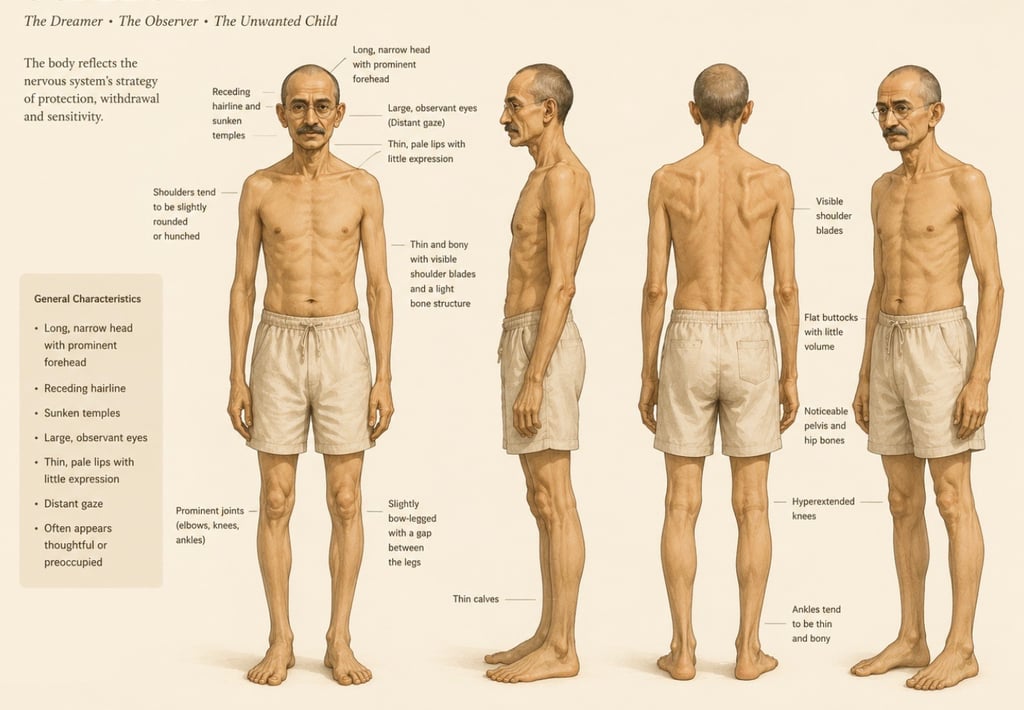
The Dreamer • The Observer • The Unwanted Child
The Schizoid character structure often develops very early in life, when connection, safety, or emotional welcome did not feel fully available to the nervous system.
A child may learn to retreat inward, disconnect from feelings, stay hyper-alert, or escape into imagination in order to feel emotionally safe.
This pattern is not a flaw or diagnosis. It is a survival adaptation that once helped protect a sensitive nervous system.
Most people carry a blend of character structures, though one pattern may feel more dominant.
Schizoid
Core Emotional Experience
People with this pattern may experience:
Feeling different or separate from others
Difficulty feeling fully safe in the world
A tendency to withdraw during stress
Fear of overwhelm, intrusion, or rejection
Feeling deeply sensitive to people and environments
Longing for connection while also fearing it
Difficulty fully “landing” in the body
Feeling more comfortable in imagination, spirituality, ideas, or inner worlds
Some people describe feeling:
“too much”
invisible
emotionally distant
disconnected from themselves
like an outsider observing life


How This May Show Up in Adult Life
Relationships
You may notice:
difficulty trusting others fully
needing a lot of space or alone time
pulling away when emotionally overwhelmed
fear of dependency or emotional engulfment
struggling to feel safe being fully seen
deep sensitivity to criticism, conflict, or tension
At the same time, many people with this pattern deeply long for authentic connection and emotional safety.
Emotional Patterns
You may notice:
overthinking or living in the mind
dissociation or “spacing out”
anxiety or hypervigilance
emotional numbness
difficulty identifying feelings
daydreaming or escaping into fantasy
feeling detached under stress
Some people fluctuate between:
overwhelm and shutdown
sensitivity and withdrawal
deep feeling and emotional disconnection
Work & Daily Life
You may notice:
deep focus or specialised interests
perfectionism
creativity and originality
strong intuition
needing solitude to recharge
discomfort in highly stimulating environments
feeling drained by excessive social interaction
Many people with this pattern are highly perceptive, thoughtful, intelligent, creative, or spiritually curious.
Common Strengths & Gifts
People with this pattern are often:
highly intuitive
deeply perceptive
imaginative
creative
thoughtful
spiritually curious
sensitive to energy and environments
intelligent and reflective
capable of deep insight
compassionate and observant
Many develop a rich inner world and a strong capacity for creativity, spirituality, analysis, or healing work.
Challenges That May Arise
Without support and healing, this pattern may contribute to:
chronic anxiety
isolation
dissociation
difficulty with intimacy
emotional shutdown
fear of conflict
nervous system overwhelm
burnout
difficulty asking for help
living mostly “in the head”
Many people become highly self-reliant because vulnerability once felt unsafe.
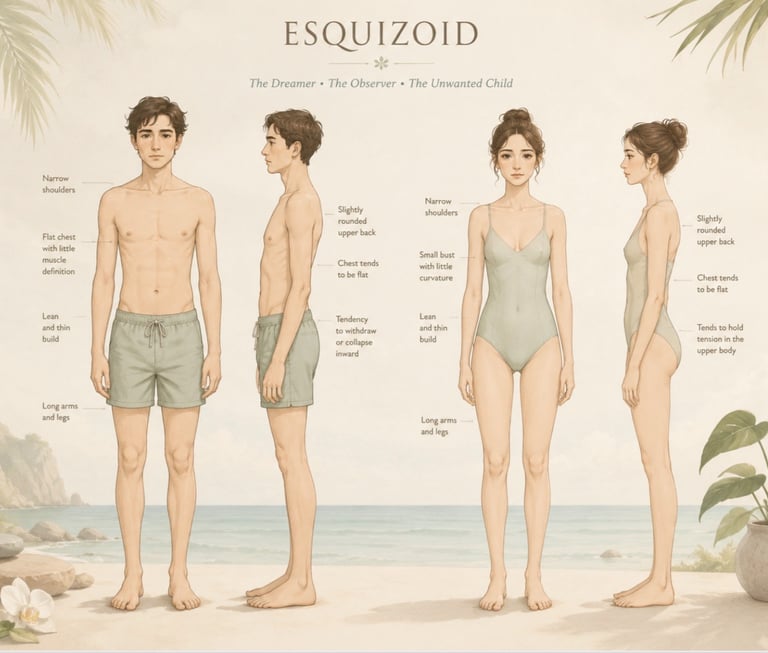
Body & Nervous System Patterns
Breathing & Energy
You may notice:
shallow breathing
tightness in the chest or throat
restricted breathing during stress
low energy or exhaustion after social interaction
difficulty feeling grounded or fully present
Many people with this pattern live in a chronic freeze or hyper-alert state within the nervous system.
Facial Expression & Eyes
You may notice:
a distant or faraway gaze
large or highly observant eyes
tension around the eyes or forehead
reduced facial expression under stress
difficulty maintaining eye contact when overwhelmed
The eyes often reflect a nervous system that learned to stay alert and cautious.
Posture & Movement
The body may appear:
pulled inward or withdrawn
thin, elongated, or lightly built
tense through the shoulders, neck, or jaw
stiff or mechanically controlled in movement
disconnected between upper and lower body
Some people may appear physically present while emotionally distant.
Grounding & the Lower Body
You may notice:
tension in the legs or hips
feeling “ungrounded”
cold hands or feet
instability or awkwardness in movement
difficulty fully relaxing into the body
Some people describe feeling disconnected from their physical needs, including hunger, rest, or bodily sensations.
Character structures are reflected not only emotionally, but also through the body and nervous system.
The body may learn to protect itself through tension, withdrawal, freezing, or reduced energetic expression.
Not every person will have all of these traits.


Healing is not about changing who you are.
It is about helping the nervous system slowly experience more safety, grounding, connection, and embodiment.
Healing may involve:
reconnecting with the body
learning to feel emotions safely
grounding practices
nervous system regulation
safe relational experiences
healthy boundaries
learning to stay present during connection
expressing needs and feelings
reducing chronic hypervigilance
developing trust gradually
The goal is not to become “less sensitive,” but to help sensitivity feel safer and more supported.
Healing & Integration
In Core Energetics Sessions
Sessions may include:
grounding practices
breathwork
body awareness
emotional expression
movement and embodiment
nervous system regulation
boundary work
voice work
exploring relational patterns
reconnecting with feelings safely and gradually
The work is always approached with respect for the body’s protective adaptations and natural pace.


Important Note
Character structures are not psychiatric diagnoses.
These patterns are best understood as adaptive survival responses that develop through early relational and nervous system experiences.
Most people carry a blend of character structures, and these descriptions are intended for self-awareness and healing — not as labels or limitations.
Lilian V. (Brazil)
Grace has really helped me overcome some past issues I had been keeping under a lid for a long time. Now, I feel happier and more confident in my life. I also feel that my speed was respected.
Márcia M. (Brazil)
Coming from an Evangelist family, I had doubts this kind of therapy could help me, I was relieved to see that my own faith was brought in, and I could start building my identity on a solid base.
Happy clients
TESTIMONIALS


Have any questions?
If you have any questions about the therapies, feel free to contact us.
Tools for wellbeing
BLOG
Clinic
Broadway
Perth, WA 6009
Contacts
info@homeofcoreenergetics.com
+61 0432 442 371
Grace Mulberry, Body Psychotherapist

Acknowledge the Traditional Custodians of the land on which we work and live, and recognise their continuing connection to land, water and community. We pay respect to Elders past, present and emerging.


Aknowledgement to Country